
Updated:
by
James Fonger, MD, FRCS, ABVLM, RPVI
Medically reviewed by James Fonger, MD, FRCS, ABVLM, RPVI
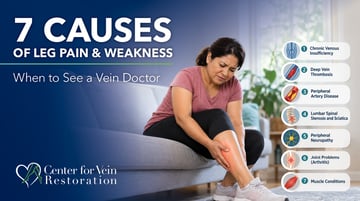
Leg pain and weakness often show up together. Your legs ache by late afternoon. The stairs feel steeper than they did a year ago. A short walk leaves your calves tired and slow.
Finding the cause starts with noticing the pattern. Pain and heaviness that build through the day and ease when you put your feet up usually point to your veins. Pain that starts with walking and stops with rest suggests it may be your arteries. Numbness, tingling, or burning when you stand or walk points to your nerves, and the problem may start in your lower back.
Vein disease rarely causes true muscle weakness. It makes legs feel weak: tired, heavy, and slow to recover.
In this blog, we’ll cover seven common causes of leg pain and weakness, explain how to tell them apart, and recommend when to see a vein specialist.
Vein disease is the most common reason legs feel heavy, tired, and weak by the end of the day, so we start there. Then we move to circulation, nerve, and other causes that can look similar but need a different kind of medical attention.
1. Chronic Venous Insufficiency
The arteries deliver blood to the foot, and the veins return it back up to the heart. To accomplish this, the veins have to move blood upward against gravity. The muscles in your calf pump the blood upward when you stretch your foot or walk across the room.
Chronic venous insufficiency (CVI), commonly referred to as venous reflux, is the most common cause of heavy, tired, aching legs. It develops when your leg veins fail to carry blood efficiently back up to your heart. The one-way valves inside those veins, which normally keep blood from sliding back down, weaken and begin to leak, allowing blood to fall back into the calf. The tissue pressure in your lower leg then begins to rise above normal.
That elevated pressure creates the classic symptoms of vein disease. According to the Cleveland Clinic, these include a full or heavy feeling in the legs and leg cramps at night. Swelling is worse after standing a while or late in the day. CVI affects about 1 in 20 adults, and varicose veins affect about 1 in 3.
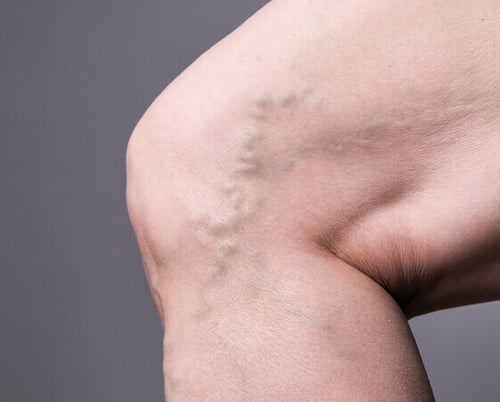
When pressure stays high for a long time, the skin around the ankles can turn darker, harder, red, dry, or itchy. Varicose veins are a reliable signal that CVI is developing in the leg. Common risk factors include older age, being female (especially after multiple pregnancies), a job that keeps you on your feet all day, and a parent or sibling with vein disease.
Clues it’s your veins: Symptoms such as leg heaviness, itching, and throbbing build as the day goes on and ease when you elevate your legs.
2. Deep Vein Thrombosis
Deep vein thrombosis (DVT) is a blood clot in a deep vein, usually in the calf or thigh. It typically affects only one leg. Signs include a painful, tender, swollen, and warm area of the leg. The leg may also look discolored, feel heavy or weak, and hurt when you walk.
DVT is more common than many people think. The Centers for Disease Control and Prevention (CDC) estimates that as many as 900,000 Americans are affected by DVT or pulmonary embolism (PE) each year. A DVT is a concern for the leg, and also for the heart and lungs. If part of the clot breaks off and travels to the lungs, it becomes a PE. A PE is a medical emergency that requires hospital care and strong blood-thinning medication.
New pain and swelling in one leg? Call 877-SCAN-DVT (877-722-6388) today.
3. Peripheral Artery Disease
Peripheral artery disease (PAD) affects the blood supply to the leg, which is the other side of the circulation system from venous return. Arteries carry oxygen-rich blood down to the legs. Plaque can narrow those arteries, so leg muscles don’t get enough oxygen when they work harder, such as during a brisk walk.
The hallmark symptom is intermittent claudication. According to the American Heart Association, PAD can cause cramping, aching, or fatigue in the hips, thighs, or calves during walking or stair climbing. The pain eases within a few minutes of rest. Other signs include cool skin, slow-healing sores on the feet, and weaker pulses in the legs.
Clues it’s your arteries: Pain starts with activity and stops with rest, in a predictable way. Elevating your legs does not help and may make it worse.
CVR treats vein disease, not arterial disease. If your symptoms suggest PAD, see your primary care physician, a cardiologist, or a vascular surgeon.
For a closer look at how a vein clot differs from artery disease, see CVR’s post DVT vs. PVD: What’s the Difference?
4. Lumbar Spinal Stenosis and Sciatica
Some leg pain and weakness starts in the lower back. Lumbar spinal stenosis narrows the space around the spinal nerves. A herniated disc can press on the sciatic nerve. Either one can send pain, numbness, and sometimes weakness down one or both legs and into the feet. Pain that travels this way is called sciatica.
According to Mayo Clinic, lumbar spinal stenosis can cause numbness, tingling, or weakness in a leg or foot. It can also cause pain or cramping in one or both legs when you stand for long periods or walk. Symptoms usually ease when you bend forward or sit.
Clues it’s your spine: Pain travels from the buttock down the back or side of the leg. Leaning on a shopping cart or sitting down brings relief.
CVR does not treat sciatica or other spine conditions. A primary care physician, orthopedic spine specialist, or neurologist can evaluate these symptoms.
5. Peripheral Neuropathy
Peripheral neuropathy is damage to the nerves outside the brain and spinal cord. Diabetes is the most common cause. According to the National Institute of Diabetes and Digestive and Kidney Diseases (NIDDK), up to half of people with diabetes have some degree of peripheral neuropathy.
Symptoms usually start in the feet and move up. They include numbness, tingling, burning, sharp pain, and muscle weakness. Pain is often worse at night. Weak foot muscles can make balance harder when walking and raise the risk of falls.
Clues it’s your nerves: Numbness or burning in both feet, in a “stocking” pattern. Symptoms don’t typically change with standing, sitting, or elevation.
Neuropathy and vein disease can exist side by side, especially in older adults. Diagnosing peripheral neuropathy usually takes a neurological exam plus tests such as blood work and a nerve conduction study. A vein ultrasound answers a different question: how efficiently blood is returning from your feet to your heart, and whether your veins are adding to the problem.
6. Low Potassium and Other Electrolyte Imbalances
Muscles need the right balance of minerals and electrolytes to contract and relax. Potassium plays a central role. When potassium drops too low (a condition called hypokalemia), leg muscles can turn weak, crampy, and tired.
According to MedlinePlus, from the National Library of Medicine, common causes of low potassium include diuretics (“water pills”), vomiting, and diarrhea. Mild cases may cause no symptoms. Bananas are a good source of potassium.
Magnesium matters too. Low blood magnesium can also cause muscle cramps and weakness. A simple blood test checks your electrolyte levels.
Clues it’s an electrolyte issue: Weakness and cramps appear in both legs after an illness, heavy sweating, or a new medication. You may also feel general fatigue.
Your primary care physician can order the blood test and adjust your medications if needed.
7. Medication Side Effects
Some medications cause muscle aches or weakness. Statins, which lower cholesterol, are the most common cause of this complaint. According to Mayo Clinic, muscle pain is one of the most common complaints among people who take statins. It can feel like soreness, tiredness, or weakness in the muscles.
Diuretics can also lower potassium, which ties back to cause number six. Amlodipine, a common blood pressure medication, can cause swelling in the ankles and feet. Adjusting the dose may help, but vein disease is still the more common cause of ankle swelling.
Never stop a prescribed medication on your own. Talk to the doctor who prescribed it. They may adjust the dose or switch you to another option.
Clues it’s a medication: Symptoms started within weeks or months of a new prescription or a dose change.
The timing and triggers tell the story. Use this overview as a starting point, not a diagnosis.
Many people have more than one cause. Testing is the most reliable way to sort them out. For your veins, the 2022 clinical practice guidelines from the Society for Vascular Surgery, American Venous Forum, and American Vein and Lymphatic Society recommend duplex ultrasound to evaluate patients with varicose veins. The test is noninvasive and painless. Other specialists can perform tests for suspected artery or nerve problems.
Call 911 if you notice any of the following:
Leg pain and weakness have many causes, and the pattern points you toward the one you are experiencing. If your legs feel heavier and more tired as the day goes on, your veins need a closer look. Vein disease is the most likely cause. It is progressive, so it does not get better or even stay the same over time. Early treatment can help prevent swelling, skin changes, varicose veins, and venous ulcers. It also means your vein treatment will be simpler, so don’t wait if you think your veins need attention.
Center for Vein Restoration is the nation’s largest physician-led vein center, with 130+ locations across 23 states and 100+ board-certified vein physicians. CVR accepts most major insurance plans, including Medicare and Medicaid.
Q: Can vein disease make your legs feel weak?
A: Yes. Vein disease rarely causes true muscle weakness, but pooled blood and elevated tissue pressure in the lower leg make legs feel heavy, tired, and achy.
Q: Why do my legs feel weak and achy in the evening?
A: This pattern often points to chronic venous insufficiency. Gravity pulls blood into the lower legs throughout the day. Elevating your legs or walking when you get home usually brings relief.
Q: How can I tell if my leg pain is from my veins or arteries?
A: Vein pain builds throughout the day and eases with elevation. Artery pain starts with walking and stops after a few minutes of rest.
Q: Can a blood clot cause leg weakness?
A: Yes. A DVT can make one leg feel heavy, weak, swollen, and painful. Call 877-SCAN-DVT (877-722-6388) for same-day or next-day DVT testing.
Q: When should I see a doctor for leg pain and weakness?
A: See a doctor if symptoms last more than a few weeks, get worse, or affect your walking or sleep. Call 911 for sudden one-sided weakness, chest pain, or a cold, pale leg.
Q: Does CVR treat nerve or artery problems?
A: No. CVR treats vein disease of the legs. For arterial disease, nerve conditions, or spine problems, see your primary care physician to find the right specialist.
 About Vein Disease
 Spider Veins
 Varicose Veins
 Vein Disease Treatments
 Treating Spider Veins
 Treating Varicose Veins
 About Us
 Patient Resources
 Physician Resources