Updated:
by
Center for Vein Restoration

Most people associate varicose veins with their legs, but these bulging, twisted veins can also appear in other areas, such as the arms and hands. Whether you’re an athlete, an active professional, a busy parent, or are generally interested in maintaining peak physical and vein health, understanding how and why veins in the arms and legs behave differently can help you take preventive steps and know when to seek expert care.
At Center for Vein Restoration (CVR), our board-certified vein specialists help patients understand and treat vein problems wherever they occur, using advanced, minimally invasive techniques to restore healthy circulation and confidence.

Varicose veins occur when the small one-way valves inside your veins weaken or fail. These valves normally keep blood moving upward toward the heart. When they don’t close properly, blood flows backward and pools in the vein, causing it to stretch, twist, and bulge under the skin.
While this process most often affects the legs, it can also happen in other parts of the body. The underlying condition, known as venous insufficiency, is a form of vein disease that can progress if left untreated.
Common symptoms include:
The legs are the most common place for varicose veins because they bear the full force of gravity every day. Your veins must push blood upward from the feet to the heart, working against that constant downward pull. UC Davis Health confirms that over time, this extra pressure weakens the vein walls and the tiny valves inside the veins, which are responsible for pushing the blood upwards against gravity.
Risk factors that increase the likelihood of developing varicose veins in the legs include:
Athletes and fitness enthusiasts aren’t immune either. Although exercise improves circulation, repeated strain, such as heavy weightlifting or high-impact sports, can sometimes worsen existing valve weakness and make varicose veins more visible.
Are you an athlete or another active individual frustrated by visible veins or leg discomfort after workouts? Don’t ignore the signs—schedule a consultation with a Center for Vein Restoration vein specialist to assess your vein problems and offer custom solutions to keep your circulation performing at its best.
📞 Call Center for Vein Restoration at 240-249-8250
📅 Or book online HERE
Do these causes of varicose veins in the arm differ from those in the legs? In short, the answer is yes, slightly.
Varicose veins in the arm are far less common because arm veins don’t fight the same gravitational challenge that leg veins do. Still, several factors can contribute:
This condition is sometimes called “effort thrombosis” because it often affects athletes or people who frequently use their arms, such as weightlifters or baseball players.
Because these arm-related causes of varicose veins often involve repetitive strain or direct compression, varicose veins in the arm are more likely to affect athletes and individuals with physically demanding jobs.
Most cases of varicose veins in the arm are not dangerous, but they can be uncomfortable or unsightly. However, in rare cases, they may signal an underlying deep vein thrombosis (DVT), a potentially serious blood clot in a deep vein of the arm or shoulder.
Professional baseball player Zack Wheeler’s recent blood clot brought this issue into the spotlight. His case underscores that clots can develop anywhere and that symptoms like arm swelling, tenderness, or discoloration should never be ignored.
When in doubt, seek prompt evaluation from a vein specialist. At Center for Vein Restoration (CVR), we offer noninvasive diagnostic testing to quickly identify whether a visible or painful vein may be part of a larger vascular issue.
While the underlying mechanism, faulty vein valves, is similar, the causes and complications differ slightly:
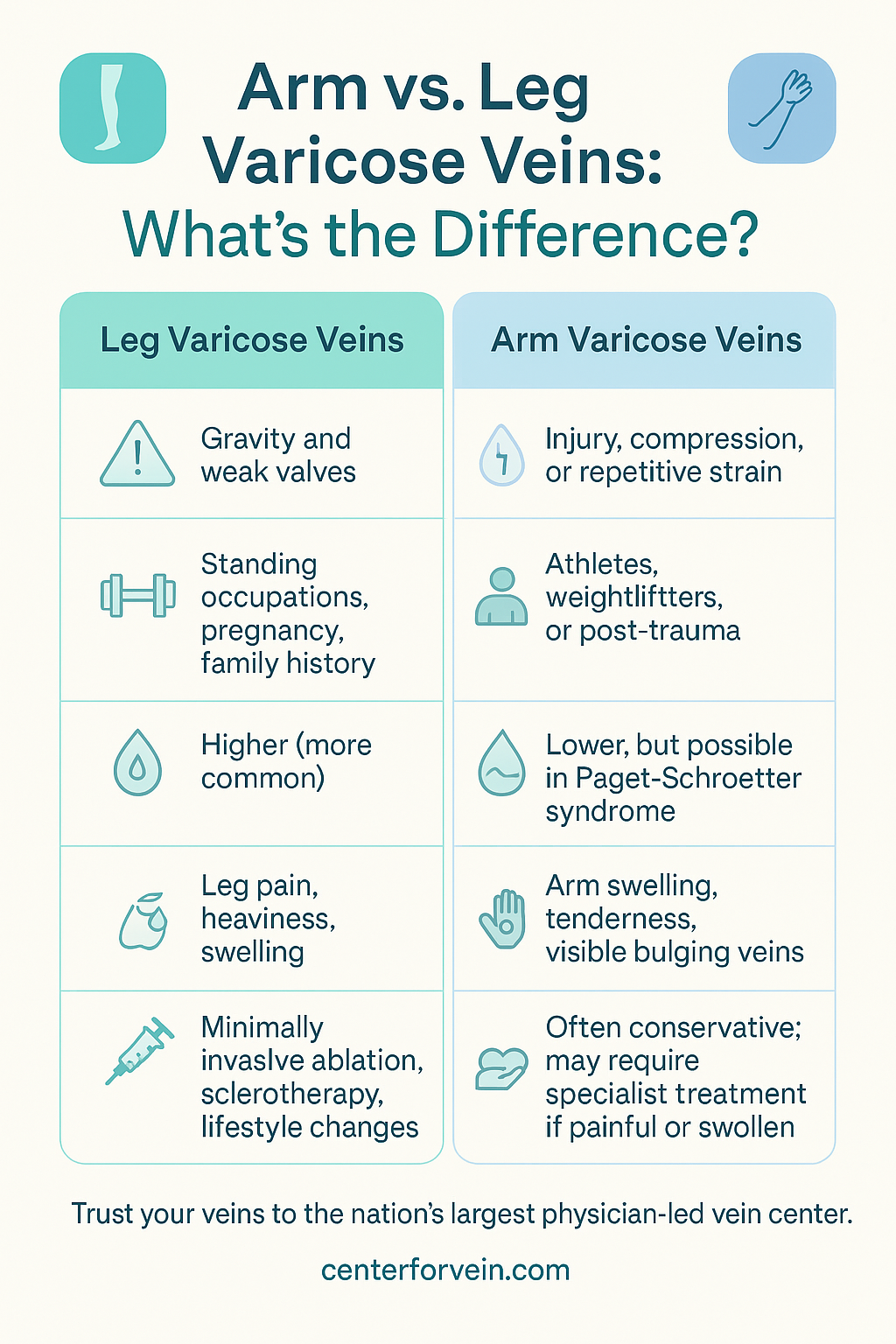
Both types share one key truth: Early evaluation matters. Ignoring vein disease anywhere in the body can lead to progressive symptoms and complications.
If you notice visible, bulging veins in your legs or arms, especially if accompanied by pain, swelling, or skin changes, it’s time to see a qualified vein expert.
At Center for Vein Restoration, our board-certified physicians specialize in diagnosing and treating all stages of vein disease. Even though arm varicose veins are less common, they can still reflect a circulatory imbalance that deserves attention.
Common reasons to consult a vein specialist include:
👉 Book your consultation with a CVR vein specialist today and discover how simple relief can be.
Modern vein treatment is safe, effective, and minimally invasive. Depending on your diagnosis, options may include:
These treatments are typically outpatient, require little to no downtime, and can dramatically improve both symptoms and appearance.
Whether you’re worried about varicose veins, spider veins, or simply want to support long-term vascular health, lifestyle habits make a big difference:
Small changes today can help prevent larger vein problems tomorrow.
Varicose veins, whether in your arms or legs, are more than a cosmetic concern. They can signal underlying venous insufficiency or increased risk for vein disease. Early diagnosis and treatment not only relieve discomfort but also prevent complications like deep vein thrombosis, skin infections, or ulcers.
At Center for Vein Restoration, our team of vein specialists uses advanced imaging and minimally invasive techniques to restore healthy circulation and confidence.
If you’re wondering about visible veins in your legs or arms, don’t wait! Get the facts and the vein care you need to live a healthy, vibrant lifestyle.
📞 Call 240-249-8250
📅Or book your appointment online with the nation’s largest physician-led vein center today.
1. Can varicose veins appear in the arms?
Yes. Although varicose veins most often affect the legs, they can also appear in the arms and hands. Arm varicose veins typically result from repetitive arm movements, injury, or vein compression near the shoulder, rather than the gravitational pressure that affects leg veins.
2. Are varicose veins in the arms dangerous?
Most arm varicose veins are not dangerous, but they shouldn’t be ignored. In rare cases, they can signal a deeper problem such as a blood clot (deep vein thrombosis), especially if accompanied by swelling, pain, or discoloration. A vein specialist can perform noninvasive imaging to rule out serious issues.
3. What causes varicose veins in the legs versus the arms?
Varicose veins in the legs occur when weakened valves fail to push blood upward against gravity, causing pooling and pressure buildup. In the arms, varicose veins more often stem from repetitive strain, trauma, or vein compression—conditions that can affect athletes, manual laborers, or anyone with upper-body overuse.
4. When should I see a vein specialist about visible veins?
If you notice bulging, twisted veins, especially with pain, swelling, or skin changes, it’s time to see a vein expert. Early evaluation can prevent complications like ulcers or blood clots, and today’s minimally invasive treatments can safely restore both comfort and appearance.
 About Vein Disease
 Spider Veins
 Varicose Veins
 Vein Disease Treatments
 Treating Spider Veins
 Treating Varicose Veins
 About Us
 Patient Resources
 Physician Resources