
Updated:
by
Jason C. Gilster, MD
Medically reviewed by Jason C. Gilster, MD

Lymphatic drainage has become one of the internet's favorite wellness projects. Spas offer drainage massages. Bathroom shelves hold dry brushes. Living rooms now have mini trampolines, vibration plates, and inflatable compression boots, all sold with the same promise: less puffiness, lighter legs, and a body that "flushes" itself.
For anyone whose ankles swell by dinnertime, that promise is hard to resist. But swollen legs have a source, and it is not always the lymphatic system. Very often, the fluid building up in your lower legs starts with vein disease.
We checked five popular lymphatic drainage trends against the research and looked at what each one means for leg swelling and vein health.
Your body moves fluid around all day. Blood delivers it to your tissues, and two systems carry it back out: your veins and your lymphatic system.
Lymph vessels collect extra fluid from the spaces between your cells. According to Cleveland Clinic, that fluid, now called lymph, is not pumped through the body the way blood is. It moves as the muscles around the lymph vessels squeeze them, and most of it drains back into the bloodstream after passing through lymph nodes.
Your leg veins rely on the same squeeze. Blood has to travel uphill from your feet to your heart, and one-way valves inside your veins keep it from sliding back down. Each time your calf muscles contract, they press on the veins and push blood upward.
The two systems also depend on each other. When vein valves fail, a condition called chronic venous insufficiency (CVI) develops. Pressure builds in the lower leg and pushes more fluid into the surrounding tissue. That buildup of fluid is called edema. A review indexed by the National Library of Medicine (NIH) explains that in venous disease, the volume of fluid can outpace what the lymph vessels are able to carry away. The result is swelling that can build faster than either system clears it.
Manual lymphatic drainage (MLD) is a very light, rhythmic massage that gently stretches the skin to guide lymph toward working lymph nodes. Lymphatic drainage massage has a real place in medicine. According to Cleveland Clinic, providers mainly use it to relieve lymphedema after breast cancer surgery, and also for lymphedema linked to other conditions, including chronic venous insufficiency.
The spa version is a different story. Cleveland Clinic notes that people without lymphedema may not see meaningful results, though the massage is not dangerous in most cases.
It is also not right for everyone. Cleveland Clinic advises avoiding lymphatic massage if you have a blood clot, deep vein thrombosis (DVT), cellulitis, heart disease, or kidney failure. That matters for anyone with a newly swollen leg. If a clot is causing the swelling, massage is the wrong first step.
Verdict: A legitimate therapy for lymphedema, oversold as a beauty and detox treatment.
Dry brushing means sweeping a stiff-bristled brush over dry skin, usually in strokes toward the heart, with the idea that it "stimulates" lymph flow. According to Healthline, there is little scientific evidence behind the claimed benefits, although dry brushing is unlikely to harm most people. What it reliably does is exfoliate.
One caution for vein health: advanced vein disease often causes skin changes near the ankles, including discoloration, irritation, and open sores, called venous ulcers. A dermatologist at Cleveland Clinic advises never brushing over broken, irritated, or inflamed skin, sores, or cellulitis.
Verdict: An exfoliation habit, not a drainage method.
Rebounding is bouncing on a mini trampoline, often marketed as a way to "open up" the lymphatic system. There is no strong research showing that rebounding improves lymph flow on its own.
What bouncing does do is make your leg muscles contract over and over. Muscle contraction moves both lymph and blood in the veins, so any lighter feeling afterward most likely comes from the movement itself. A brisk walk produces the same calf muscle action with no equipment.
Verdict: Reasonable exercise with a misleading sales pitch.
Vibration plates are platforms that shake while you stand, sit, or exercise on them, causing your muscles to tighten and release rapidly. Promoters claim they boost lymphatic drainage. Evidence for that benefit in healthy people is limited.
The logic mirrors rebounding. If a vibration plate helps fluid move, the likely reason is muscle activation, the same mechanism that walking, stair climbing, and calf raises provide. When it comes to moving fluid, the plate is not doing anything your calves cannot do without it.
Verdict: Your calf muscles do the work, not the plate.
Compression boots are inflatable sleeves that fill with air in sequence, then release. This trend sits closest to real medicine. Mayo Clinic lists sequential pneumatic compression as a lymphedema treatment, along with compression socks, bandages and garments. Cleveland Clinic notes that inflatable leg devices sold to the public are mostly used by athletes.
For everyday leg swelling from vein disease, graduated compression stockings are the standard first step. Cleveland Clinic recommends talking with a provider before buying even over-the-counter stockings, and notes that stockings rated 20 mmHg or higher require a prescription. Compression is not safe for everyone. An international consensus statement indexed by NIH lists severe artery disease in the legs among the reasons to avoid it. And no compression device belongs on a leg with a suspected blood clot until a clot has been ruled out.
Verdict: The principle is sound. For daily swelling, start with properly fitted stockings and a doctor's guidance.
Puffy ankles every evening may point to your veins, not your lymph. The vein experts at Center for Vein Restoration can help sort the difference.
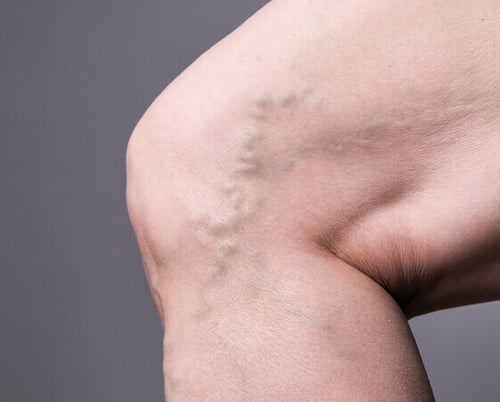
If your legs and ankles swell more as the day goes on and improves when you put your feet up, your veins are a likely source. CVI symptoms include heavy legs that feel full, achy, or tired, and swelling that is worse after standing for a while or at the end of the day. CVI affects about 1 in 20 adults. Other clues include visible varicose veins and skin changes near the ankle.
When CVI goes untreated for a long time, fluid retention in the legs can overwhelm the lymph vessels, too. That combined condition is called phlebolymphedema. The NIH-indexed review describes treatment as correcting the vein problem first, after which the lymphatic swelling can improve. Some people also need ongoing compression to keep swelling under control. No massage, brush, or plate can repair a vein valve.
Some swelling needs attention right away. The National Heart, Lung, and Blood Institute lists swelling, pain or tenderness, warmth, and red or discolored skin as signs of DVT, a clot in a deep leg vein. New swelling in one leg is not a candidate for a drainage massage. CVR's DVT rule-out service offers same-day, noninvasive testing. Call 877-SCAN-DVT (877-722-6388). If leg swelling comes with chest pain, shortness of breath, or coughing up blood, call 911.
Swollen ankles and legs also have causes outside the veins, including heart failure, kidney disease, certain medications, and lymphedema itself. CVR's guide to lymphedema vs. edema vs. lipedema explains the differences. A duplex ultrasound shows whether your veins are contributing. If they are not, a CVR physician will refer you to the right specialist.
The habits that support your veins also support your lymphatic system, and none of them require special equipment. Think of them as lymphatic drainage for legs that actually has research behind it.
A trend can make one afternoon feel lighter. Swelling that comes back every day deserves a diagnosis. Center for Vein Restoration (CVR) is the nation's largest physician-led vein care network, with 130+ locations across 23 states. Board-certified vein physicians use duplex ultrasound to find the source of leg swelling and build a treatment plan around it. CVR accepts most major insurance plans, including Medicare and Medicaid.
Q: Does lymphatic drainage help swollen legs?
A: It can help swelling caused by lymphedema when a trained therapist performs it. For swelling caused by vein disease, treating the vein problem is what addresses the source.
Q: Can lymphatic drainage help varicose veins?
A: No. Lymphatic drainage cannot repair the damaged valves that cause varicose veins. A vein specialist can determine whether your swelling comes from your veins and which treatment fits.
Q: Is lymphatic drainage massage safe if I have varicose veins?
A: Lymphatic massage is not recommended if you have a blood clot, cellulitis, or certain heart or kidney conditions. If you have varicose veins or a swollen leg, ask a vein specialist first, since a clot cannot be ruled out by looking at the leg.
Q: Do vibration plates help lymphatic drainage?
A: Evidence for that claim is limited. Any benefit most likely comes from muscle activation, which walking and calf raises also provide.
Q: What is the difference between lymphedema and venous swelling?
A: Lymphedema happens when lymph vessels or nodes are damaged or not working properly. Venous swelling comes from failing vein valves, and long-term vein disease can eventually strain the lymph vessels too.
Q: How do I reduce swelling in my legs and ankles?
A: Walking, calf raises, elevating your legs above heart level, and compression stockings recommended by a provider all help. Swelling that returns most days deserves an evaluation to find the cause.
Q: When should I see a doctor about leg swelling?
A: See a vein specialist if swelling returns most days, comes with heaviness or visible veins, or causes skin changes near the ankle. Sudden swelling in one leg with pain or warmth needs prompt evaluation for a blood clot.
 About Vein Disease
 Spider Veins
 Varicose Veins
 Vein Disease Treatments
 Treating Spider Veins
 Treating Varicose Veins
 About Us
 Patient Resources
 Physician Resources